Posts

Showing posts with the label Conservation

Bird Calls: To play or not to play
Image
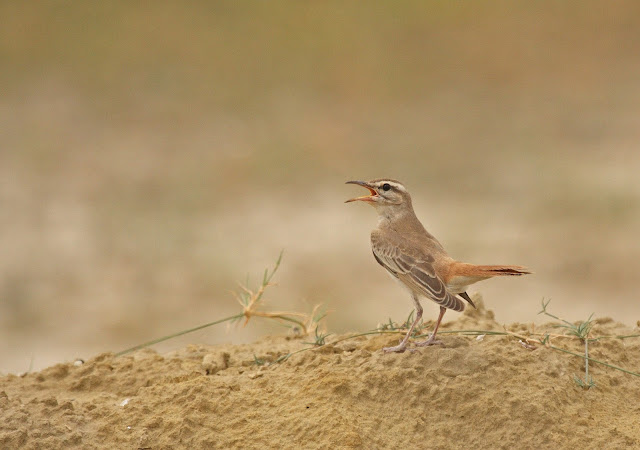
Cut that call:   Ethics and Misuse of Artificial Birdcalls This piece finds place on Round Glass here Thanks are due to the team at Round Glass A few years ago, I was in Nagaland working on a community conservation project in the Mokokchung- Zunheboto area. In addition to project work, other members of the team and I would go on birdwatching walks at dawn, braving the early morning chill for sightings of grey sibia and mountain bamboo partridge. On one of these walks, I remember one of my companions playing the call of the Naga wren babbler ( Spelaeornis chocolatinus ) for so long that the poor bird came and sat on the blessed phone. When I asked him if this was wise, he argued that he was one of the more serious bird watchers in the country, and could tell that the bird was not disturbed. I asked what would happen if people from the surrounding landscape (including those who hunt) picked up this practice, but he was confident that they could not. The basis for thi...

Not-for-profits: shying from the mirror?

Image
Published at The Citizen here . Thanks are due to Aishwarya Adhikari and Gayeti Singh at The Citizen and  Priya Singh for comments on the draft. The unedited version below. ‘ Only 10% of 31 lakh NGOs in the country submitted mandatory reports to the authorities ’ and ‘ The Central Government has cancelled foreign funding registration of select NGOs for alleged violation of law ’. On the one hand press has highlighted these issues pertaining to not-for-profits and on the other they are today being questioned and critiqued, like seldom before. It is not uncommon to come across references like ‘ are getting less dynamic and more bureaucratic’ and ‘ have lost the plot ’ for not-for-profits; sub-optimal output or not delivering as promised too is an oft-heard complaint. For this discussion I look beyond both these issues – state and mediocrity. Mediocrity , ‘ our greatest bane ’ , is as much an issue here as it elsewhere in our society while state’s interaction ...

Livelihoods for Conservation: Some Questions

Image
Livelihoods for Conservation: Some Questions This piece was published on The Citizen on 8 th March here. Thanks are due to The Citizen, Gayeti and Aishwarya. The initial session brought out the need for data collection from and patrolling in the landscape. As the participants ( stakeholders to sustainable action in the landscape ) opened up, significant proportion of the discussions focused on livelihoods. This was in course of a workshop organized to help put in place a long-term plan for wildlife conservation in the landscape ; a conservation priority area located in the seven sisters region. The workshop provided the much needed platform for stakeholders ( from diverse social, economical and professional backgrounds ) to not only put forth their views but also engage on the topic with others. As the deliberations began one was left wondering why all livelihood enhancing activities were taken to be of help to conservation; in other words as strengthening conserva...

A tale of two conflicts

Image
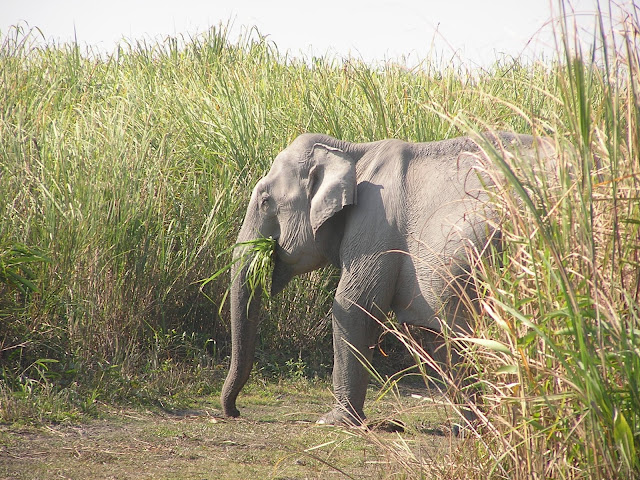
People, we were told, were not keen to participate in more meetings with NGOs as promises, by most NGOs, had not been kept. We had gone to discuss conservation education, seek inputs prior to freezing the plan, and ended up listening to the story of human – elephant conflict in the neighbouring villages. Story of the situation having gone from bad to worse. Village A had planned a meeting to discuss human - elephant conflict. Besides the villagers the meeting was to include members of two local organizations.   A local politician got a whiff of the meeting and came over. During the meeting he actively participated in the discussions and promised to help. Elections were around the corner and as a corollary he was pro-active in not only taking the discussions further towards actions but also sanctioned funds. His only condition was that the fence, which had been decided during the meeting, should come up prior to the elections. Image: Karpagam Chelliah The electric fe...

BMCs in Kachchh

Image
Human support for biodiversity Nimesh Ved and Pankaj Joshi This piece finds place in Deccan Herald on 12 th April, 2016. Thanks are due to Ritesh, Mahendra, Vipul, Astha, Yogesh, Akshit and the teams at Sahjeevan and SJS. We also thank Anitha and Deccan Herald. All images are by Astha and depict the Kachchh landscape. We were looking at the state-wise numbers of Biodiversity Management Committees (BMC) in the country. Madhya Pradesh stood atop the list with 23,743 and Nagaland at the other end with 10. However, what left us surprised was the number of committees in the largest state, Rajasthan. The state had only 31 to its credit. The number for these committees which are to be set up in every local body — urban and rural — stands at 3,405 for Gujarat.  There would be factors at play to account for the stark variance in numbers and these need to be looked into, but here, we will focus on our experiences in Kutch. We are a part of a team that ...

Will birds come to oil palm plantations?

Image
Frontier Despatch carries this article in its 1 st April, 2016 issue. Some of the participants were handling binoculars for the first time and I needed to go slow. We began with the basics. I shared of how beautiful the birds appear when seen with binoculars as compared to that with the naked eye. Then moved on to using them; wearing them over neck and adjusting their width, observing objects with either of and both the eyes, selecting objects to view – far and otherwise, and putting focus to use. We deliberated on the need to keep them away from moisture ( especially in a place like Mizoram ) and, as is the case with binoculars, how not to ‘clean’ them. As we walked more we learnt how to make better use of the bird-book as also discussed body-parts of birds, local names and specific species – bulbul ( for example ) became Black Bulbul or the Red-vented Bulbul. One participant also brought a Mizo book on wildlife to look up local names – it surely helped. I observed that some o...

Wildlife Human Conflict: Some Questions

Image
This piece appears in the Assam Tribune on 16 th February 2016. Many thanks to Assam Tribune and Narayan Sharma. The wildlife human conflict occupied a significant chunk of time during a recent meeting called to put in place a conservation plan for a priority landscape. Agreements and disagreements over the topic spilled over from the sessions into tea-time and late evening discussions. While these deliberations did not provide answers they helped set off a stream of questions; most of which remained unanswered. The paragraphs that follow carry some of these discussions. Unanswered questions, as Colin Wright said, “ aren't threats; they're challenges and catalysts ”. One would like to begin with Dampa Tiger Reserve in Mizoram. The major issue today, in the landscape, is land-use change; jhum ( shifting cultivation ) is being replaced by cash crops like oil-palm. As a corollary conflict has turned from being primarily ‘seasonal’ into a ‘round the year’ phenomenon. I...

A conversation on conservation

It is not often that someone strikes you as being different and original these days. Rarer still when you not only carry this impression beyond a longish conversation but are set thinking. I share part of the conservation with this thin, sharp eyed, bespectacled uncle below; one that focuses on conservation. On being asked by a colleague if he did attend a, larger than usual, meeting organized at the village he said no. The enthusiastic colleague then brought in a couple of references to bring in clarity on the event. Oh yes, he said, but there was too much lecturing and so I just walked off. Then added that the meeting was doomed from the beginning itself. The colleague, now sporting a bewildered look, was then told that 3 people were given shawls as a token of respect and wherever this is done there is a group of people, usually few times the number of those receiving the shawls, wondering why they were not amongst those receiving! They often felt neglected and wondered what ...