Posts

Showing posts with the label Phuye

Phuye - Interactions on CCA Mapping

Image
We started with a film . This would keep boredom at bay for participants who had arrived on-time as also help lay a platform for further discussions. The film " A Hunter's Tale ", that I have facilitated screenings earlier too,  held the participant's interest ~  Some of the participants then got on to identifying species in the field-guides. As we wondered on how Hoolock Gibbon and Hornbills were charismatic species from participant's perspective as well, it dawned on us that only the elders were then vocal! On asking the young participants we got to know that none of them had seen either Hoolock Gibbons ( Ashuai)  or Hornbills ~ As the participants arrived we moved on to Prayer and Introduction by the Nanga Greener Zone (NGZ) Committee; Governing body of Community Conserved Area (CCA) that spans 14 Sema villages ~ Participants had questions for us as well as the Committee. These ranged from whether GPS units would be provided for each village ...

Phuye - Some Moments

Image
Mosaic that greets one enroute Phuye; town, shifting-cultivation and a range of mono-culture plantations including the amazing kiwi . .  Water availability is an issue during the dry months in Phuye; damage-control (here) was apparently not very effective . .  A Shield Bug; looks smart with orange tipped antenna and sometimes releases  substances with unpleasant odour . . ( thanks Geetha Iyer for help on this )  Space to park . .  This watch at the Community Hall fascinated at first sight . . A snack with few parallels . .  Many thanks to people of Phuye

Phuye - A Church

Image
From across the village ~ At the gate ~ Arc gracing the door ~ Door allowing the morning light in ~ Plant adorning the wall ~

Phuye - Some Homes

Image
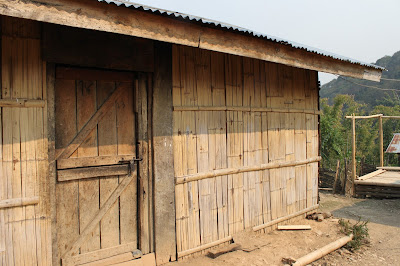
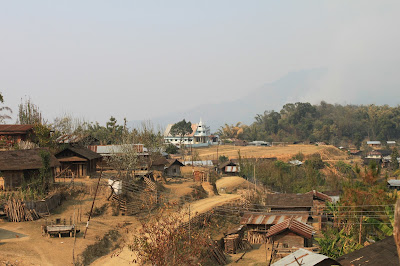
Images are from a recent trip to Phuye ( Zunheboto , Nagaland ) while text is from J H Hutton's seminal 1921 publication ' The Sema Nagas '.  Homes, so different from each other, stood out, reminding one of the skill-sets and simplicity of those they belonged to. At some of these we were lucky to have tea and meals. Sema villages being as a rule very much  smaller,—a village of 100 houses is quite large for a Sema  village — the cultivated lands are nearer to the village and  the fighting men more easily assembled in case of a raid.  The approach to a Sema village is always over land consisting  largely of open jhum, and in part of very thick low  jungle, in which the movement of an enemy would be most  difficult. The arrangement of the houses in a Sema village is looser  and more open than in an Angami village, and the scattering  of the houses is conducive to greater cleanliness and decreased  danger from fire....