Posts

Showing posts with the label wildlife conservation

In an Old World: Humans and Animals
Image
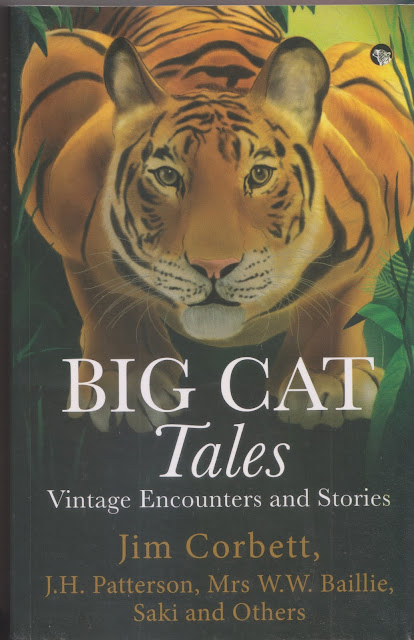
Into the Wild  Big Cat Tales: Vintage Encounters and Stories Jim Corbett, J H Patterson, Mrs W W Baillie, Saki and Others Compiled and edited by: The Civil Junglees Collective Illustrations: Devashish Verma Publisher: Speaking Tiger Books Pages: 352 Price: 399/- Published at The Hindu .  Thanks are due to the team at The Hindu and Speaking Tiger Books. 22 ‘encounters’ and 6 ‘stories’ make up this anthology. The likes of F W Champion and EHA contribute to the ‘encounters’ while the line-up of the authors of the ‘stories’ include Saki and Alice Perrin. Majority of these writings are based in the Indian sub-continent; they talk of tigers and leopards. However, lions and the African wilderness also find space in few writings. The ‘Compilers and Editors’ have put in laudable efforts to bring this high quality natural history writing to the readers. They succinctly talk about the book – in the introduction – thus, “Our attempt in the collection has been to find humanity in a context...
Ancient ghat, Holy river and an Irony

Image
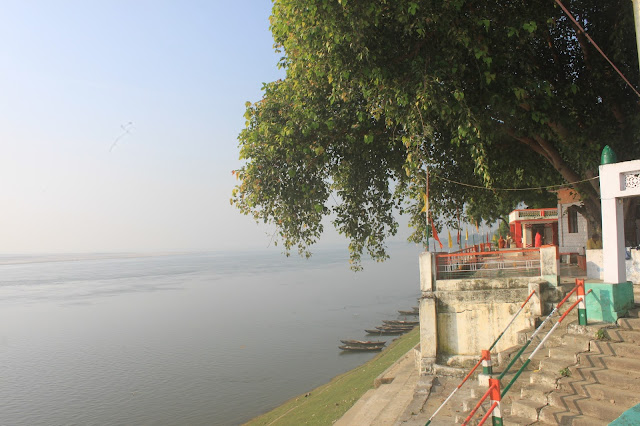
An encounter with the elusive Gangetic dolphin in northern India A slightly edited version of this piece appears at The Third Pole . Acknowledge and appreciate the time taken out by Samir Sinha, Nachiket Kelkar, Venkatesh Dutta, Zak Klausner and of course the team at The Third Pole for enriching this piece. Dhakwa In summer 2020, I caught glimpses of a creature I had never seen before, at the point where the Varuna and Ganga rivers meet in the holy city of Banaras. It was early evening, and I was looking at the monsoon flood waters. I have had many memorable birding experiences at this confluence. Banaras, in the north Indian state of Uttar Pradesh, is famous for its ghats (series of steps leading down to a river), and I often go to Aadi Keshav Ghat, the site of the ancient Aadi Keshav temple. Brown- and black-headed gulls migrate here in large numbers. On some occasions smaller flocks look like paper boats swaying on the water; on others larger gatherings are like a wall arising from ...

Why I do not stress on Conservation Education at school; now!

All effort, no yield This piece finds place in The Hindu EDGE on 1 st July . Thanks are due to the team there. Few weeks ago, friends, who work to get children to fall in love with books and stories, visited our school. I love reading and enjoyed being a part of the conversation as it moved from what we could do with books at our school to why books are crucial for children. As someone who, today, puts in more time with books than with friends, I found little to disagree. However, the line – ‘ world without books is poorer and dangerous ’, brought out the dilemma I had been encountering of late. I shared it with the small group: “ Do these actions tantamount to pushing our ‘agendas’ on schools and children, in this fashion? Do we do this more with children, for they do not have the space to vocally disagree? How fair is this? ” Last week, at a school in a village in Himachal Pradesh, I was reminded of the discussion. I had accompanied a friend and noticed story-bo...

Not-for-profits: shying from the mirror?

Image
Published at The Citizen here . Thanks are due to Aishwarya Adhikari and Gayeti Singh at The Citizen and  Priya Singh for comments on the draft. The unedited version below. ‘ Only 10% of 31 lakh NGOs in the country submitted mandatory reports to the authorities ’ and ‘ The Central Government has cancelled foreign funding registration of select NGOs for alleged violation of law ’. On the one hand press has highlighted these issues pertaining to not-for-profits and on the other they are today being questioned and critiqued, like seldom before. It is not uncommon to come across references like ‘ are getting less dynamic and more bureaucratic’ and ‘ have lost the plot ’ for not-for-profits; sub-optimal output or not delivering as promised too is an oft-heard complaint. For this discussion I look beyond both these issues – state and mediocrity. Mediocrity , ‘ our greatest bane ’ , is as much an issue here as it elsewhere in our society while state’s interaction ...