Posts

Nagaland - On the roads - Once more

Image
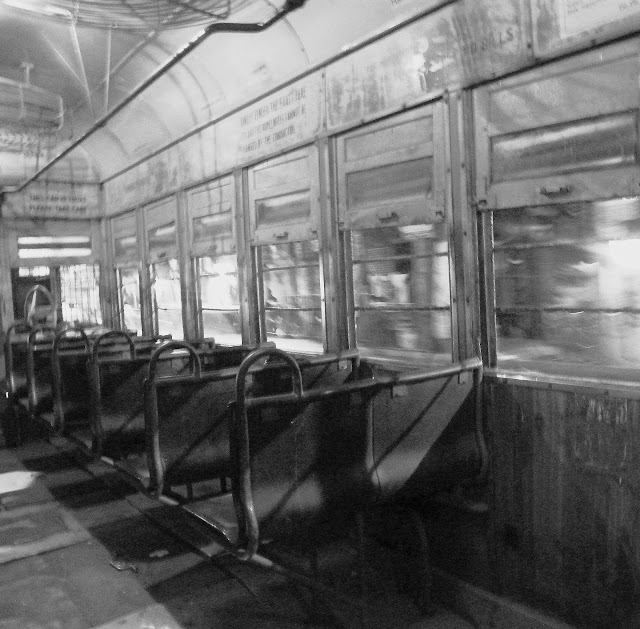
Past days went to Kohima and Mokokchung where had fun walking around. Pleased to post some more images clicked on the move ( again with phone ). This was on way from Mariani to Mokokchung - 90 odd kms from tea-plantations in Assam to the hills in Nagaland. For some reasons the uncle driving the sumo insisted on filling up the seats at the rear first.  Longsa abuts the National Highway between Tuensang and Mokokchong and is beautifully located on a hill.  This was on the roads of Kohima. Traffic brought the vehicle movement on the standstill such that one could move around freely and even click images.  This one on the Kohima roads as well. Like Aizawl I like walking here and wish the laptop does not accompany me. Weather is lovely and bakeries dot the roads.  Dr. Choudhury in his ' A Pocketguide to the Birds of Nagaland' lists 492 species : situation is surely changing for the better.  Many thanks to friends in Nagaland.

Northern Treeshrew in Southern Mizoram, India

Image
This post shares a recent note of mine from JBNHS 108 (2):  North eastern India comprising the states of Assam, Arunachal Pradesh, Nagaland, Manipur, Mizoram, Meghalaya and Tripura forms a part of a rich biogeographic unit and is among the biodiversity 'Hotspots' of the world (Choudhury 1999, Myers  et al . 2000, Ved & Lalramnuna 2008). Formerly referred to as Lushai Hills of southern Assam (Choudhury 2008), Mizoram is situated between 21.58 N - 24.35 N and 91.15 E - 93.29 E covering an area of 21,081 sq kms (Anonymous 2006). In broad terms, the forests of Mizoram are classified as ‘Cachar Tropical Evergreen (IB/C3)’ and ‘Cachar Semi Evergreen (2B/C2)’ (Champion & Seth 1964). Saiha in extreme south Mizoram shares a boundary with Lawngtlai to its north. Some of the best rainforest of north-east India are found in southern Mizoram, covering parts of the districts of Lawngtlai and Saiha (Choudhury 2006). Treeshrews are entirely confined to South and Southe...

Calcutta

Image
This post carries a piece I wrote after my trip of December 2009  How long I have wanted to go to Calcutta; from before it became Kolkatta!  I recalled discussing with Yash ( more than once ) the urge to re-visit 'childhood moments'. Both of us have been brought up in a section of the city as we incidentally realized over one of our tele-conversations.  This sudden and unplanned trip was certainly not uncalled for.  Roshni and I landed at the airport and as I sipped coffee I glanced at the yellow taxis through the glass panes. In addition to my almost continuous banter on Calcutta since we got aware to the possibility of the trip also recalled our conversation on taxis during her call from the very venue few months ago. Taste of the apple-juice greeted my senses at the airport. Airport was far from our home then and I used to have apple-juice each time I visited it with papa, to receive his official guests. The taxi started, large hoardings and high-rise build...

Nagaland - On the roads -

Image
Share some interesting images from a recent trips to Nagaland ... A friend did remark that at the current juncture atmosphere in the state is favourable to conservation: these boards on the Kohima - Mokokchung route surely seem to underscore the fact; the challenge lies in building on this platform ~ Highly appreciated !!    Board at the entrance of a village with a google imagery on the left and a 'notice' on the right; the mobile phone (all images in the post are clicked by one as none of us carried a camera) did not allow me to click the entire board in one go! This we came across on an old vehicle while walking around the very lovely Mokokchung town.  Not a sign on the roads but came across the newspaper while moving. Wildlife issues do receive coverage in local press and these Amur Falcons I was told were also declared 'affected by bird flu' by the authorities to prevent people from hunting them. They come in thousands in Wokha ...

Steppe Eagle and Jerdon’s Baza in Saiha, Mizoram

Image
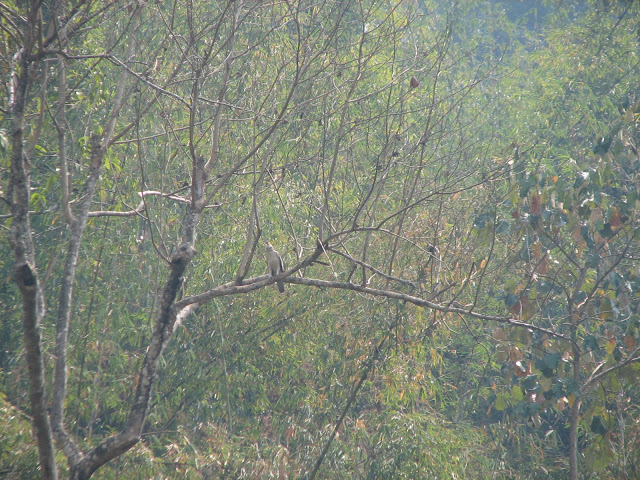
Another post that finds place in Indian Birds : 7(4). Introduction North-eastern India, and Mizoram: North-eastern India, comprising the states of Assam, Arunachal Pradesh, Nagaland, Manipur, Mizoram, Meghalaya, and Tripura, forms part of a rich biogeographic unit and is among the biodiversity “Hotspots” of the world (Choudhury 1999; Myers et al . 2000; Ved & Lalramnuna 2008). Within the hotspot our efforts are concentrated in the state of Mizoram. Mizoram (21º58’N–24º35’N, 91º15’E–93º29’E) covers an area of 21,081 kms 2 ( Anonymous 2006). In broad terms, the forests of Mizoram are classified as ‘Cachar Tropical Evergreen (IB/C3),’ and ‘Cachar semi evergreen (2B/C2),’ by Champion & Seth (1964). Its land and people have a tendency to being somewhat detached, obscure, and unknown, finding scarce mention in literature, whether historical, anthropological, or ecological (Singh 1996). Saiha district, located in extreme southern Mizoram, covers an area of 1,965.81 kms 2 ...

A Day in the Kuno Wilderness

Image
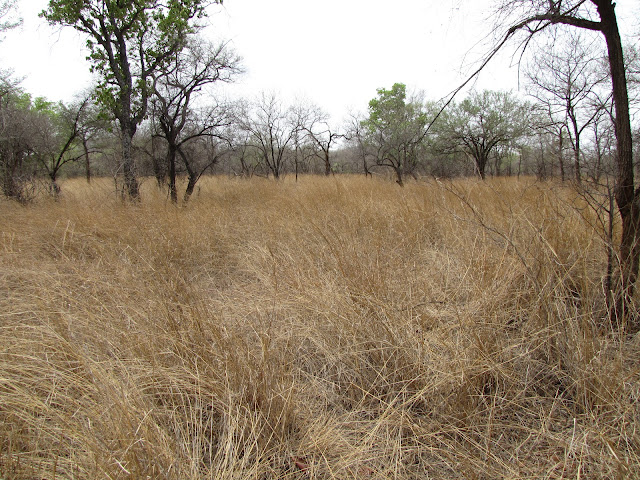
This piece appears in SanctuaryAsia February 2012 issue.  What ever confusion I had distinguishing the small Indian mongoose Herpestes javanicus from the larger grey mongoose Herpestes edwardsii disappeared as we saw them, one after another, within a gap of five minutes. The smaller of the two was a frequent visitor at our campus near the kotra ( boundary wall ) . While both are slender with long, bushy, tapering tails, short legs, long and pointed snouts and rounded ears, the grey mongoose has long, seemingly coarser fur, with a more reddish than yellowish tinge. It was a special moment to see both, this early in the morning and I was thrilled. Perhaps it was the early morning breakfast that Ummed Kushwah had made -- my favourite Agraa breakfast ( read alu subzi – paratha) that had set the lucky tone of the day. I have always loved the laid-back, rustic landscape of the area. Agraa, a nucleus for the villages relocated from the Kuno Wildlife Sanctuary, is less th...

Dadi

Have been missing her ( grandmother ) crazy ...  This post shares 3 pieces I have put in place thinking of her ....  The first one I wrote during 2007 at Baghmara ~  Dadi - I love you. “Nimesh, fetch me a glass of water” she said and I got up to do the needful for dadi. Suddenly it struck me as something strange – giving water to my own grandmother! It was the first time in 26 years that I had seen her asking for water. She always did her tasks herself; I could recall her telling me one evening “somebody who doesn’t even fill his own glass of water cannot to anything commendable in life”. And I remember it for she did not preach but shared as some one equal. In spite of this I have grown up asking her for favours each day.             She embodies strength for me, somebody who finds a way out during unforeseen circumstances. She is not scared to speak out - be it about her priorities or simply somethi...