Posts

There's something about South Mizoram

Image
Once upon a time comes a movie that makes you fall in love went the tagline of 'Lamhe' (happily saw  it few times with dadi ) and once upon a time comes an email - a response to what you write - that makes you feel warm, happy of your writing and the ability to make that connect and of course leaves you craving to go 'there' again . .  It talks of Lawngtlai - lights of which I saw from my room (near the Saiha Helipad) each evening. Initially I used to get irritated at Lawngtlai having electricity and my having to see it from the hill opposite that lay covered in sleepy darkness - but gradually started loving it - a bright shining necklace worn by the hill. The forests of Lawngtlai (along the Aizawl - Saiha road) where I first saw civets on a tired evening and also rats during moutam (bamboo flowering); of course the rats scared me. .  Our trips to Ngengpui Wls and Phawngpui (Blue Mountain) NP were possible only because of Pu Tlana. He then stayed in t...

SCB - Conservation Education Talk

Image
An abstract I submitted at the recently organized SCB by ATREE at Bangalore was accepted and I had an interesting experience attending the Conference. While the abstract was submitted under "Biodiversity and People" - one of the 4 themes of the Conference my talk was a part of a session titled "Conservation Management : Tools and Education". Pleased to share  the abstract   and select slides. Conservation Education (CE): Questions enroute an invigorating journey. CE program at Saiha (Mizoram) had me undertake a range of activities that include film-screenings, church-newsletters and tea-stall discussions . These were organized on a regular basis over a period of 3 years with different segments of society and efforts made to generate synergies with local practices. My involvement with the entire gamut from plan to documentation greatly enriched me and also left me with questions.   Questions that range from whether we are communicating in an ...

Learning by sharing

Image
Briefly and happily write of 2 experiences where sharing enabled me to learn quite a bit. Got an opportunity to co-ordinate a workshop on Conservation Education with Pranav Trivedi at the SCCS 2011 and quite enjoyed the experience at the energy filled event. After interactions over google-chat and telephones we decided that in the given time it would  make sense  to begin with what Conservation Education is and then to share our individual journeys - learning. Share few slides from my presentation which talked of dilemmas in one of the last slides. Dilemmas like : Should conservation education be a separate subject or included in the overall structure by way or greening of curriculum? Do we make efforts and go out of our way to make our daily lives more conservation friendly? Do we value nature for nature’s sake? Conservation Leadership Course (2011) organized by Tiger Watch at Ranthambhore was an invigorating event; discussions and experience-shari...

Nagaland - On the roads - Once more

Image
Past days went to Kohima and Mokokchung where had fun walking around. Pleased to post some more images clicked on the move ( again with phone ). This was on way from Mariani to Mokokchung - 90 odd kms from tea-plantations in Assam to the hills in Nagaland. For some reasons the uncle driving the sumo insisted on filling up the seats at the rear first.  Longsa abuts the National Highway between Tuensang and Mokokchong and is beautifully located on a hill.  This was on the roads of Kohima. Traffic brought the vehicle movement on the standstill such that one could move around freely and even click images.  This one on the Kohima roads as well. Like Aizawl I like walking here and wish the laptop does not accompany me. Weather is lovely and bakeries dot the roads.  Dr. Choudhury in his ' A Pocketguide to the Birds of Nagaland' lists 492 species : situation is surely changing for the better.  Many thanks to friends in Nagaland.

Northern Treeshrew in Southern Mizoram, India

Image
This post shares a recent note of mine from JBNHS 108 (2):  North eastern India comprising the states of Assam, Arunachal Pradesh, Nagaland, Manipur, Mizoram, Meghalaya and Tripura forms a part of a rich biogeographic unit and is among the biodiversity 'Hotspots' of the world (Choudhury 1999, Myers  et al . 2000, Ved & Lalramnuna 2008). Formerly referred to as Lushai Hills of southern Assam (Choudhury 2008), Mizoram is situated between 21.58 N - 24.35 N and 91.15 E - 93.29 E covering an area of 21,081 sq kms (Anonymous 2006). In broad terms, the forests of Mizoram are classified as ‘Cachar Tropical Evergreen (IB/C3)’ and ‘Cachar Semi Evergreen (2B/C2)’ (Champion & Seth 1964). Saiha in extreme south Mizoram shares a boundary with Lawngtlai to its north. Some of the best rainforest of north-east India are found in southern Mizoram, covering parts of the districts of Lawngtlai and Saiha (Choudhury 2006). Treeshrews are entirely confined to South and Southe...

Calcutta

Image
This post carries a piece I wrote after my trip of December 2009  How long I have wanted to go to Calcutta; from before it became Kolkatta!  I recalled discussing with Yash ( more than once ) the urge to re-visit 'childhood moments'. Both of us have been brought up in a section of the city as we incidentally realized over one of our tele-conversations.  This sudden and unplanned trip was certainly not uncalled for.  Roshni and I landed at the airport and as I sipped coffee I glanced at the yellow taxis through the glass panes. In addition to my almost continuous banter on Calcutta since we got aware to the possibility of the trip also recalled our conversation on taxis during her call from the very venue few months ago. Taste of the apple-juice greeted my senses at the airport. Airport was far from our home then and I used to have apple-juice each time I visited it with papa, to receive his official guests. The taxi started, large hoardings and high-rise build...

Nagaland - On the roads -

Image
Share some interesting images from a recent trips to Nagaland ... A friend did remark that at the current juncture atmosphere in the state is favourable to conservation: these boards on the Kohima - Mokokchung route surely seem to underscore the fact; the challenge lies in building on this platform ~ Highly appreciated !!    Board at the entrance of a village with a google imagery on the left and a 'notice' on the right; the mobile phone (all images in the post are clicked by one as none of us carried a camera) did not allow me to click the entire board in one go! This we came across on an old vehicle while walking around the very lovely Mokokchung town.  Not a sign on the roads but came across the newspaper while moving. Wildlife issues do receive coverage in local press and these Amur Falcons I was told were also declared 'affected by bird flu' by the authorities to prevent people from hunting them. They come in thousands in Wokha ...

Steppe Eagle and Jerdon’s Baza in Saiha, Mizoram

Image
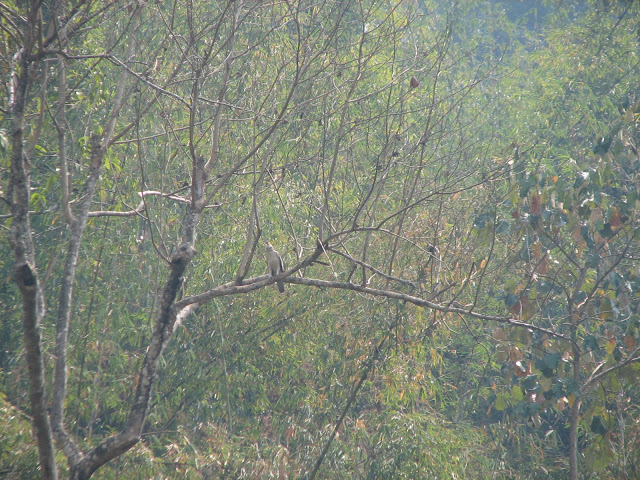
Another post that finds place in Indian Birds : 7(4). Introduction North-eastern India, and Mizoram: North-eastern India, comprising the states of Assam, Arunachal Pradesh, Nagaland, Manipur, Mizoram, Meghalaya, and Tripura, forms part of a rich biogeographic unit and is among the biodiversity “Hotspots” of the world (Choudhury 1999; Myers et al . 2000; Ved & Lalramnuna 2008). Within the hotspot our efforts are concentrated in the state of Mizoram. Mizoram (21º58’N–24º35’N, 91º15’E–93º29’E) covers an area of 21,081 kms 2 ( Anonymous 2006). In broad terms, the forests of Mizoram are classified as ‘Cachar Tropical Evergreen (IB/C3),’ and ‘Cachar semi evergreen (2B/C2),’ by Champion & Seth (1964). Its land and people have a tendency to being somewhat detached, obscure, and unknown, finding scarce mention in literature, whether historical, anthropological, or ecological (Singh 1996). Saiha district, located in extreme southern Mizoram, covers an area of 1,965.81 kms 2 ...

A Day in the Kuno Wilderness

Image
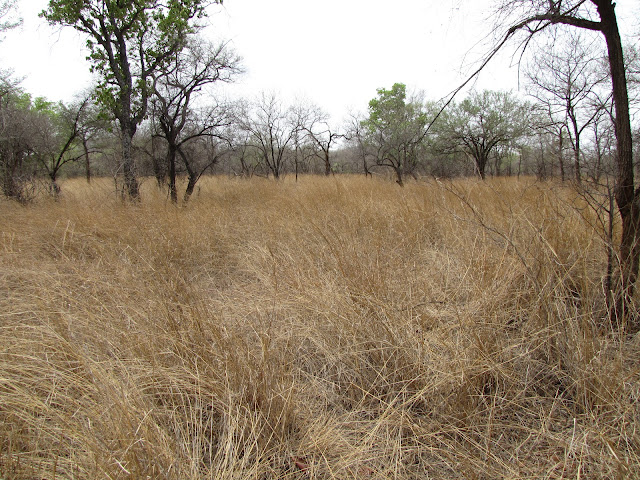
This piece appears in SanctuaryAsia February 2012 issue.  What ever confusion I had distinguishing the small Indian mongoose Herpestes javanicus from the larger grey mongoose Herpestes edwardsii disappeared as we saw them, one after another, within a gap of five minutes. The smaller of the two was a frequent visitor at our campus near the kotra ( boundary wall ) . While both are slender with long, bushy, tapering tails, short legs, long and pointed snouts and rounded ears, the grey mongoose has long, seemingly coarser fur, with a more reddish than yellowish tinge. It was a special moment to see both, this early in the morning and I was thrilled. Perhaps it was the early morning breakfast that Ummed Kushwah had made -- my favourite Agraa breakfast ( read alu subzi – paratha) that had set the lucky tone of the day. I have always loved the laid-back, rustic landscape of the area. Agraa, a nucleus for the villages relocated from the Kuno Wildlife Sanctuary, is less th...