Posts

Campus: Birds

Image
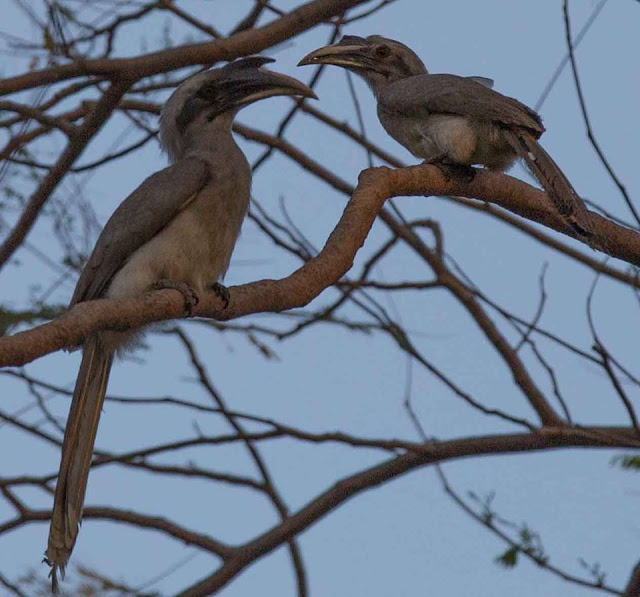
The ‘festival’ and bird ‘season’ in our parts appears to overlap, as we get ready for both – place below list of species we have come across during our ‘bird walks’, Many a time I have slowed down my cycle on spotting a bird but then been unable to identify the ‘exact species’; these   moments too have been fun – especially in the drizzle,   Thanks are due to students and colleagues for joining on many of these walks, Binoculars for Charity for equipment and to Kumar Radhakrishnan for the images,  Ashy Prinia Asian Koel Bank Myna Barn Swallow Baya Weaver Black Drongo Black Kite Black Redstart Black-crowned Night Heron Black-eared Kite Black-headed Gull Black-winged Kite Black-winged Stilt Bluethroat Blyth's Reed Warbler Booted Eagle Brahminy Starling Brown Shrike Brown-headed Barbet Brown-headed Gull Cattle Egret Common Hawk Cuckoo Common Hoopoe Common Iora Common Myna Common Pigeon Common Quail Commo...
Beyond the black box: Sankat Mochan 2019

Image
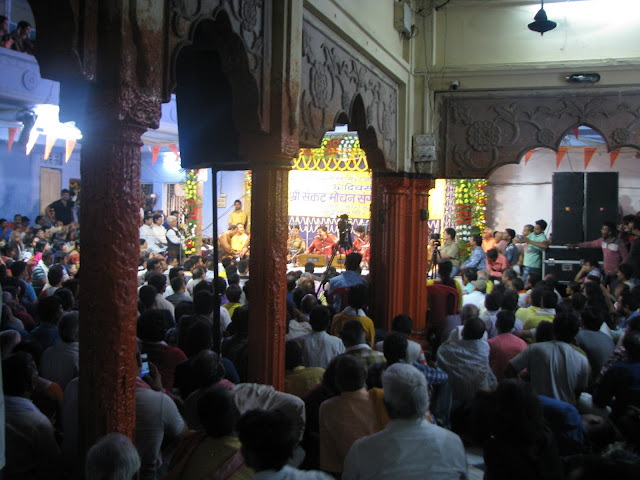
Musical offerings in Hanuman’s court Thanks are due to the team at Sruti . An edited version of this piece appears in their September 2019 issue. Ustad Moinuddin Khan, prior to his performance, shared, “ This is where I derive pleasure in playing ” while Vidushi Kaushiki Chatterjee conveyed respects of each of her family members to the deity. Her father too, like was the case with few other artists, had previously performed at the venue. Kankana Banerjee, the first lady to perform at Sankat Mochan, set up a record of sorts   by performing at the venue for the 41 st consecutive year. Shailaja Khanna in her article, An ode to the master musician, put it thus, “ the concert is regarded as on offering – a ‘hazari’ which literally translates to formal presence in the court of the ruler or divine ”. Banaras too has a role. Kathak maestro Shovana Narayanan had stated, during a performance at a temple nearby, “ at temples of Banaras we perform for God and ourselves, neither ...

Teachers and Challenges

From a teacher’s lens This piece finds place in the Hindu EDGE.  Thanks are due to the team at Hindu EDGE . Few days ago, over tea, a friend mentioned the challenges she, a teacher, faces at her school. These include provocative parents, all-knowing students, changing technology and pressure from management. ‘Provocative parents’ had me recall a discussion, at a workshop, on how parent’s interference, especially in high paying schools, is on the rise. In some cases it is they who set the school agenda. The conversation took me to the challenges at our school. While the friend works with a fee paying English medium school in a Metro I am associated with a free Hindi medium school located at the fringes of a much smaller town. Majority of our students belong to under privileged families. In the lines that follow, I share some of these challenges. Students. On the one hand in our quest for a ‘happy’ school and ‘overall development’ we devote a significant chun...

Of animals and people

Image
Title: Animalia Indica: The finest animal stories in Indian literature Edited by: Sumana Roy Illustrations by: Rohan Dahotre Published by: Aleph Book Company Year of publication: 2019 ISBN: 978-93-88292-57-3 Thanks are due to the team at First Post The piece on First Post here Some weeks ago a friend shared a poster bearing a poem and illustration of the elephant. The eight line ‘simple’ poem and the ‘evocatively’ done elephant in water colour touched me like few posters have done. It told me something about elephants, their actions and emotions and – in a way – enabled me to connect with the species. In this it did more than most, if not all, posters on the species that I have come across. Majority of the posters, for example, highlight the pachyderm’s weight, age, height and other statistics including difference between 2 species – African and Asian. The friend and I got on to discuss how good literature – stories and poems – can play a pivot...

Choking the escape

Image
Traffic jam in Tirthan valley Published in Deccan Herald's Spectrum here . The unedited version placed below.  Thanks are due to the team at Deccan Herald and Himalayan Ecotourism .  Image Credit: Himalayan Ecotourism Gushaini, in the lower Tirthan valley of Kullu district ( Himachal Pradesh ), is synonymous with the Great Himalayan National Park ( GHNP ). Till a few years ago broadly two categories of people used to visit the valley. Those seeking the peaks and valleys of GHNP – be it for treks, wildlife sightings, silences or else - and the anglers lured by trout in the Tirthan river! Their numbers were low; read manageable. Today, their numbers have been overtaken by the quintessential tourist. Those who come – with friends or family - looking for a good time, away from where s/he stays. These include people coming for weekends and those who add Gushaini to other destinations nearby or not so nearby. This summer I visited Gushaini after a gap of fe...

Rural India in City Schools

Villages in our schools Published in The Hindu’s EDGE on 22 nd July. Thanks are due to the team at The Hindu. To Upma and her colleagues I am indebted for the opportunity. I was asked if I would share some of my experiences of village life with students. This discussion, with students, would precede their trip to an organization working in a rural set-up. I figured that this would be challenging given that most students came from affluent families.   In other words, they would possibly have limited exposure like I once had. I began on a lighter note with snippets of my ignorance during my initial days in Central India - how it had taken me more than a month’s stay to figure out the significance of 3 tea-stalls in the village, abutting each other and each boasting of strictly loyal clientele - my first lesson in caste. Unlike the illustrations I had come across in text-books, neither was panchayat a meeting with 5 people under a tree, nor was sarpanch ...

Words matter

Mirrored in words This piece finds place in Teacher Plus ’ July issue. Thanks are due to the team there. “ Why is the number of children in a school called strength ?” This question from the article, ‘ Of skills, learning, intelligences and … the marketplace ’ struck me. Why is it not the abilities of teachers or students, or values the school adhered to, or even the school’s infrastructure, I wondered, which are a school’s strength? The question also had me recall terms used in similar vein. Besides having me bemused, intrigued, and on occasions even uncomfortable, these terms have often left me with unanswered questions. Do these terms, their usage, mirror our changing worlds? During a recent conference, a speaker had mentioned how previously the ministry governing education in our country was referred to as ‘Education Ministry’. Today, schools and colleges come under the ambit of the ‘Ministry of Human Resource Development’. This change in title, he stressed, i...

Why I do not stress on Conservation Education at school; now!

All effort, no yield This piece finds place in The Hindu EDGE on 1 st July . Thanks are due to the team there. Few weeks ago, friends, who work to get children to fall in love with books and stories, visited our school. I love reading and enjoyed being a part of the conversation as it moved from what we could do with books at our school to why books are crucial for children. As someone who, today, puts in more time with books than with friends, I found little to disagree. However, the line – ‘ world without books is poorer and dangerous ’, brought out the dilemma I had been encountering of late. I shared it with the small group: “ Do these actions tantamount to pushing our ‘agendas’ on schools and children, in this fashion? Do we do this more with children, for they do not have the space to vocally disagree? How fair is this? ” Last week, at a school in a village in Himachal Pradesh, I was reminded of the discussion. I had accompanied a friend and noticed story-bo...

Trees: At School

Image
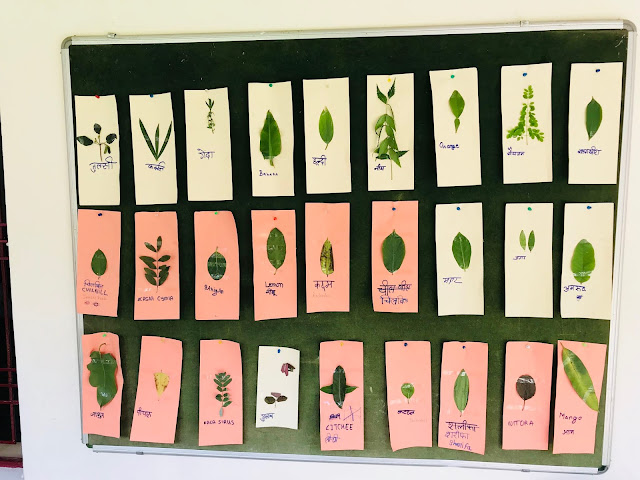
So, what do you do at school I have often been asked?  On occasions I smile, on others I respond with a 'teach English' or that 'I play and go-out with children'. At times the answer also is 'good question'.  Besides these, what I also do is see, touch and feel trees and leaves.  This was a fun day. We got moving around to fetch leaves in small groups. The groups could bring more than one leaf only if the leaves were collected from the ground. Children got the leaves, discussed which species each of these could belong to. Before writing they had to confirm these names with the uncle who helps with gardening at the school. Few cases were confusing - we had disagreements. For these we went with the uncle to the tree.  At the end our board did not have space for 2 leaves. It was fun, during the days following, to see them touch the leaves and also alter spellings.  This was another fun day. We sat in a circle just outside the scho...